The Past and Future of Vellum & Razor Blades
Vellum and Razor Blades
In 1989, I walked into my first Design Technology class at college in the north of England carrying a list of items I had been told to buy. A scale ruler, pencils of various hardness, a set of Rotring pens, vellum, and razor blades.
Most of the items made sense. But I had never heard of vellum. And razor blades? Why on earth would I need razor blades in a design class?
Vellum, I learned, is a translucent material historically produced from the skin of a young animal. It has been used for centuries to write medieval manuscripts and some of the oldest known Buddhist texts. British Acts of Parliament are still printed on vellum for archival purposes because of its ability to last over a thousand years. In our class, we used a modern drafting version as the surface we drew on. The razor blades were our erasers. You would carefully scratch the ink off the surface of the vellum, rub a little oil from the side of your nose onto the paper to re-seal it, and then re-ink the design. Precise, tactile work.
That list of tools stayed with me. Not just for what they were, but for what they represented: precision and craft, and working with your hands to produce something you could stand behind. When I came to name this business over three decades later, I recognised where I had started and how far the tools had evolved since. Drawing boards gave way to CAD, then BIM, and now AI. At every shift, I leaned in, adapted my workflows, and pushed to become more effective. That became my norm. V&RB carries that name because it honours the craft that started everything while delivering the accumulated experience of what came after.
The Pattern That Kept Repeating
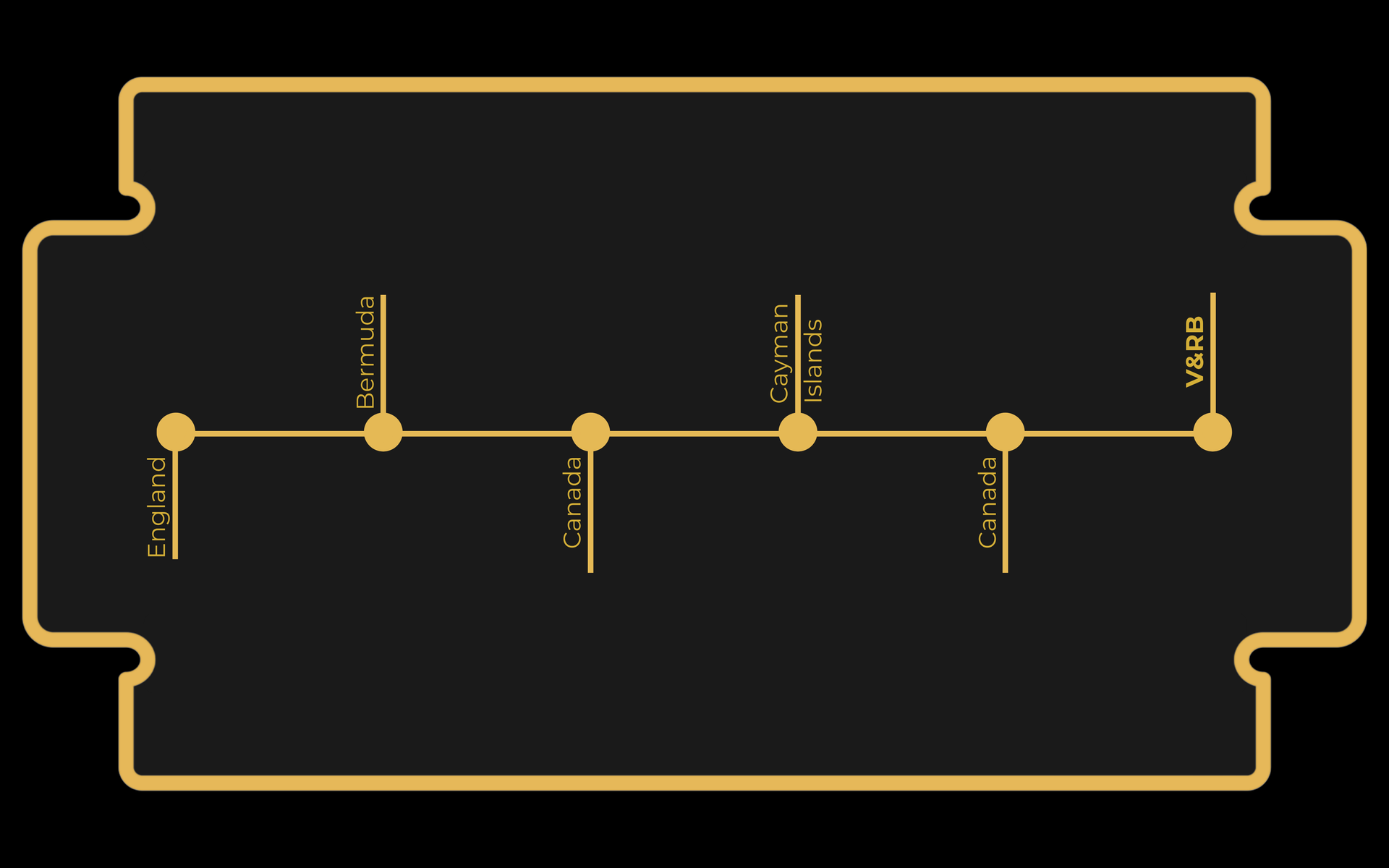
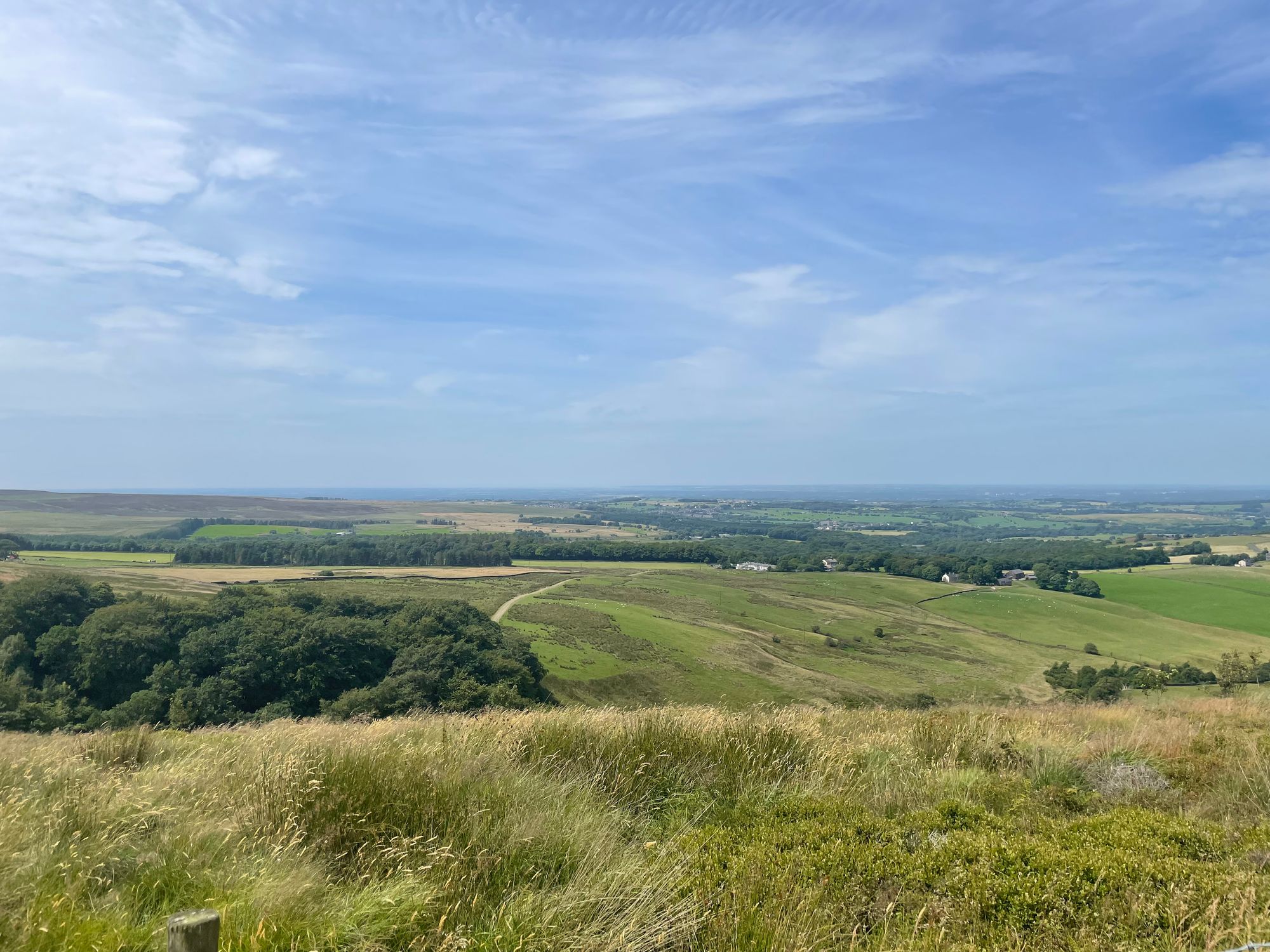
I am originally from Darwen, an old cotton mill town in Lancashire, England. I am proud of my upbringing in the north and the work ethic it instilled. Leaving the country in 2001 was not easy, but the AECO industry has given me the privilege of living and working across four countries, and every move taught me something about how projects succeed and fail.
I started my career doing short-term contracts across power stations, schools, shopping malls, and nuclear facilities. Every few months meant a new firm, a new team, and a new set of lessons. This period of my career allowed me to understand how some of the best in the industry worked, but also the opposite. When a person or team does not have systems in place, things can go south immensely.
When CAD replaced drawing boards, the knowledge of digital strategy did not exist. Few restructured the process around it. Information disappeared into the computer, split into multiple versions, coordinates drifted between drawings, and details that looked right on screen were not anchored to anything real. The risks were invisible until it was too late to fix them cheaply.
Bermuda: A Single Version of the Truth
At 29, I moved to Bermuda and stepped into a role bridging two firms, one architectural and one structural, on a major renovation project at Belmont Hills Golf Resort. Both needed production help. Instead of running two disconnected drawing sets, I coordinated all digital production into a single, coherent package within a shared CAD environment.
We agreed a real-world coordinate system, reduced duplication, and connected plans, sections, and details into one set everyone could trust. That project became one of the cleanest collaborations of my career. The structural engineer, Dave Ramrattan, still calls it the best project he has worked on.
The lesson was clear. Job titles do not prevent failure. Shared standards, clean handoffs, and a single version of the truth do. When someone owns the coordination as a system, not as a task, projects stabilise.
Bermuda gave me five years of hard work and good living. A beautiful archipelago of 181 islands with buildings painted in a mosaic of colour and pink sand beaches overlooking aqua-blue bays. But the professional lesson mattered more than the scenery. That single coordinated truth became the seed of everything I have built since.

Vancouver: The Same Broken Pattern
In 2006, an opportunity took me to Vancouver, British Columbia, where I spent the next decade as a BIM coordinator and implementation lead on complex mixed-use towers, care homes, and residential projects. Vancouver is a stunning place to live, with mountains and ocean as its backdrop, and on my 40th birthday I was awarded Canadian Citizenship, something I remain deeply proud of.
I evolved my process from CAD to BIM immediately, but the pattern did not change. Every project started with haste. No one locked the delivery promise early. Existing conditions data arrived late, so design teams built on assumptions that became embedded and forgotten. Documentation was duplicated across 2D and 3D environments. The 3D model became a render engine rather than a coordination enforcer.
Good people kept failing inside broken systems. Project managers, BIM leads, and designers all working hard but misaligned on what was being delivered, in what order, by whom, and based on which decisions. By the time drawings went out for procurement and construction, vendors were working from uncoordinated information. The fixes always happened under pressure.
The Cayman Islands: The Breaking Point
I met my wife in Vancouver, and together we relocated to the Cayman Islands in 2016. I joined an owner and contractor firm with an internal design department as Senior BIM/VDC Manager and built the department from a blank canvas. The systems we built were tested on a handful of projects including a residential tower, a school, a supermarket, and an office tower.
The systems we built proved themselves through construction. But what I realised was that the broader organisational environment was working against them. Competing priorities, unclear decision rights, and resistance to changing established habits removed the ability for truth-led decisions to take hold. Even with the right tools, the right people, and the right intent, the conditions around the system prevented it from reaching its full potential.
That was the breaking point. The problem was never tools or talent. It was that no one had put a simple, shared system in place to start projects with clarity, to lock the delivery promise early, to define who owns what and when, and to make coordination transparent rather than uncertain.
Powell River: Building What Comes Next
Leaving the Cayman Islands, my wife and I knew we were going back to British Columbia. We also knew we did not want to return to the city. While still in Cayman, we asked: what is this place called Powell River on the Sunshine Coast?
We knew nothing about it. We started to research and it looked intriguing. The outdoors was your back yard. I leave my back door and within 300 yards I am in my favourite place: the forest. We have a playground of logging roads, 32 lakes, and an off-road vehicle that lets us explore it all. We camp in our vehicle, safely inside from the bears and cougars. It offers the life we want outside of work, and that balance matters.
Powell River became the place where V&RB took shape. I continued to study the industry, observing where things break, understanding the effects of those breaks, and building solutions that pave a road toward more effective delivery. In May 2025, I officially incorporated Vellum & Razor Blades as a company. The Razor Method and its SHARP principles have evolved significantly since, and I am very excited about the trajectory.
Why Vellum & Razor Blades Exists
Over three decades, the same pattern repeated across every firm, every country, and every technology shift I have lived through. Projects start with haste. The delivery promise is never locked. Ownership stays vague. Coordination fragments. And good people absorb the stress of holding reactive work together.
V&RB exists to replace that pattern with something better. The Razor Method gives owner, design, and contractor firms a structured way to start every project with a clear delivery promise, defined responsibilities, and a single coordinated workflow. Five principles, spelled SHARP: Start With Clarity. Hone The Checks. Assign Real Owners. Run One Workflow. Prime The System.
This is not about more documents. It is not about better software. It is about how you start, who owns what, and whether coordination runs on clarity or chaos.
My mission is to make delivery predictable and coordination confident, so design intent survives construction pressure and reputation stays intact.
Predictable Delivery. Confident Coordination.
If that resonates, I would welcome you to subscribe and follow along. If you are facing delivery pressure right now and want to talk about what is breaking, book a clarity call.
Cheers, Rick Aspin Founder, Vellum & Razor Blades