Architecture, Engineering, Construction, and Operations (AECO). The industry that plans, builds, and manages buildings and infrastructure.
How Vellum & Razor Blades Came to Be
In 1989, I walked into my first Design Technology class at college in the north of England carrying a list of required tools, a scale ruler, pencils of varying hardness, a set of Rotring pens, vellum, and razor blades.
Most of the items made sense, but vellum was unfamiliar to me. And razor blades? That felt even stranger. Why would I need razor blades in a design class?
Vellum, I learned, is a translucent material once made from animal skin and valued for its durability and was used for centuries for manuscripts and archival records. In our class, we used a modern drafting version as the surface we drew on.
The razor blades were our erasers. You would carefully scratch the ink from the surface, a process known as scratching out then use the back of your thumb to rub a little oil from the side of your nose back onto the vellum to seal it, and then re-ink the design. The oil stopped the fresh ink from running. It was precise, tactile work.
That list of tools stayed with me. Not only for what it contained, but for what it stood for: precision, craft, and the quiet responsibility of making something you could stand behind. More than three decades later, when the time came to name this business, I recognised both where I had started and how far the tools had travelled. Drawing boards gave way to CAD, then BIM, and now the navigation of AI. Each shift asked more of the people doing the work, and I learned that standing still was never really an option. You either adapt with intention or get bypassed by change. V&RB carries that name because it honours the discipline that shaped me, while pointing toward a way of working that asks all of us to be sharper, clearer, and more deliberate in what we build.
"You either adapt with intention or get bypassed by change."
England: Building the Foundation
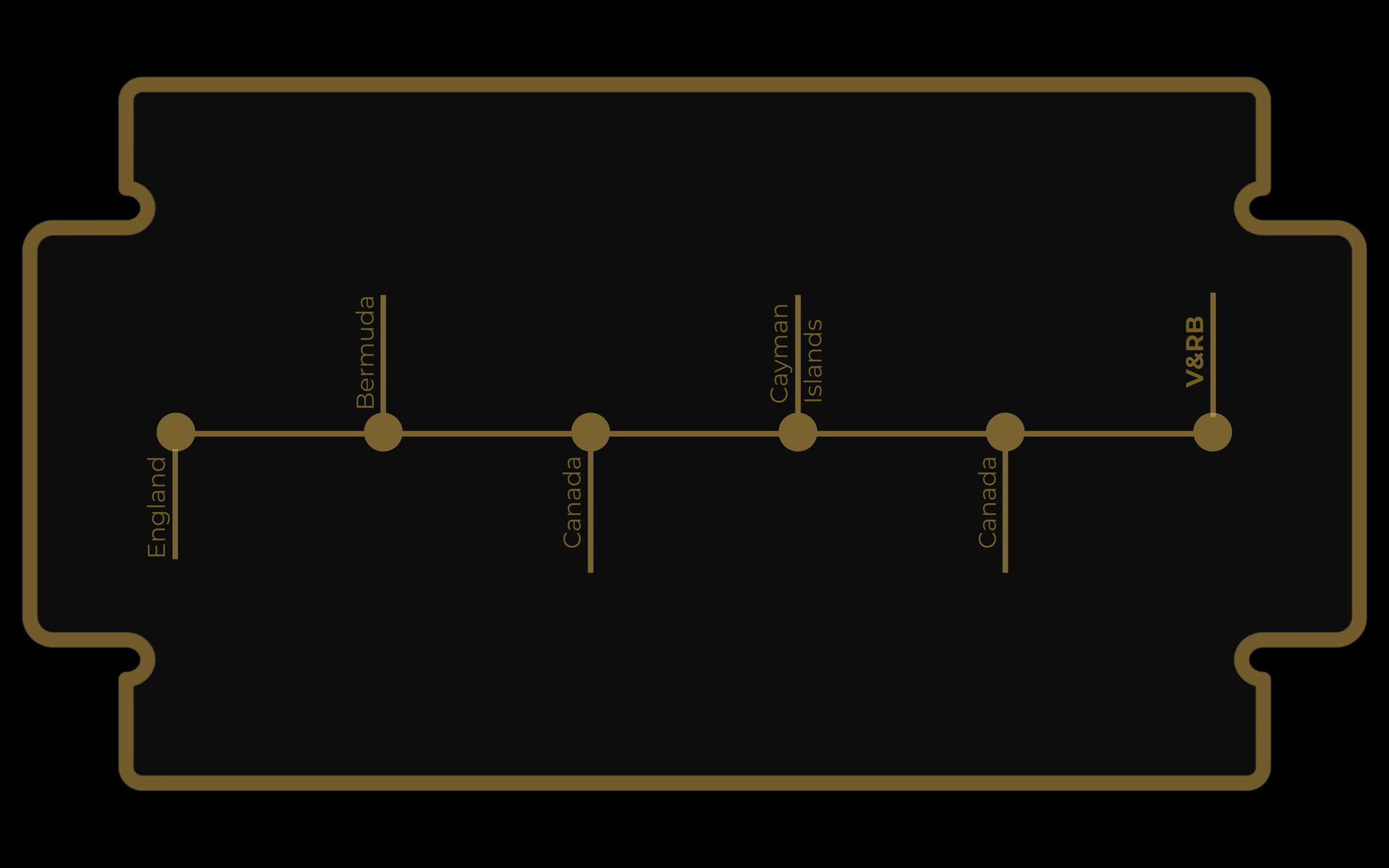
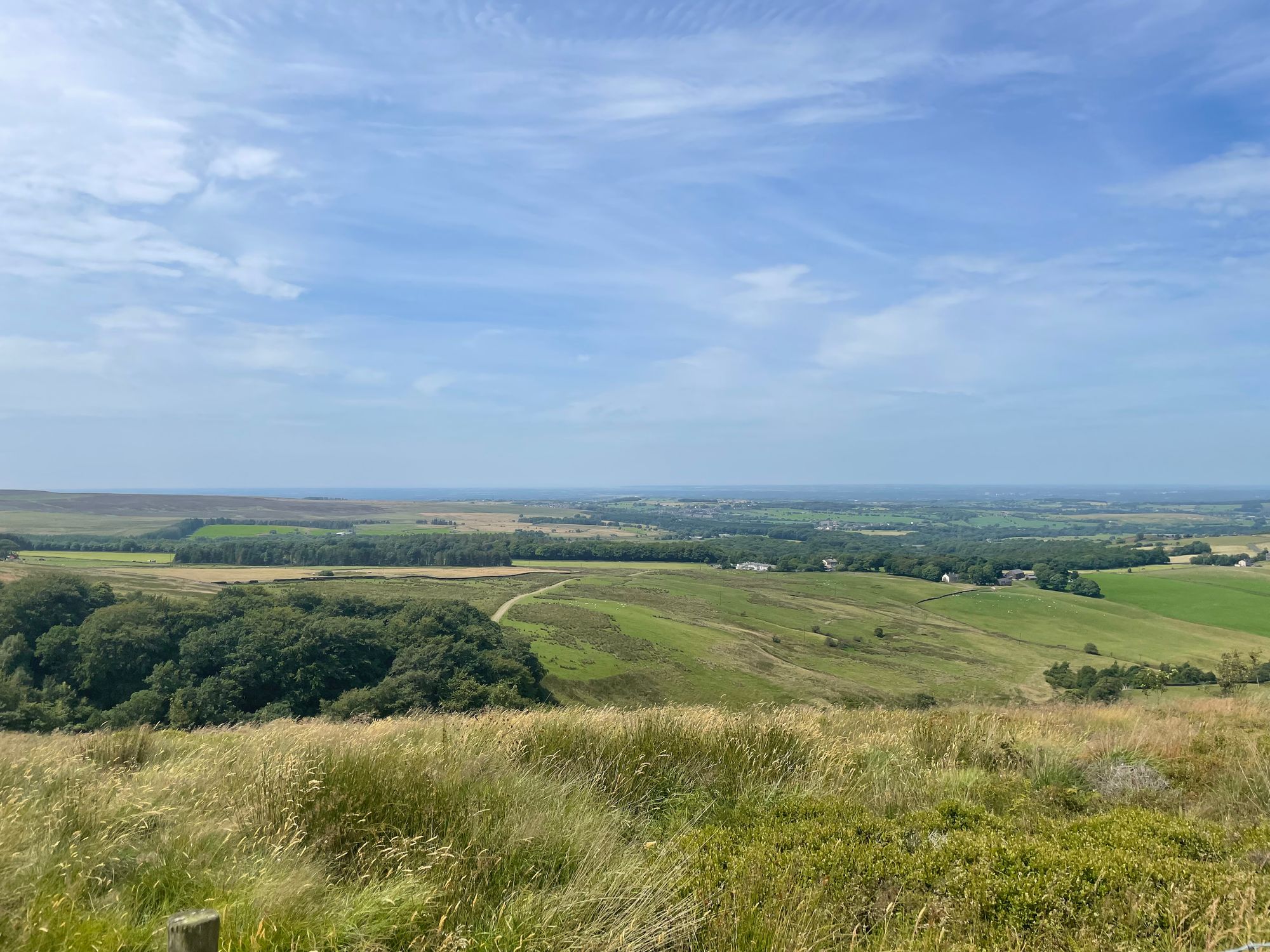
I am originally from Darwen, an old cotton mill town in Lancashire, England. I am proud of my northern roots and the work ethic it gave me. Leaving the country in 2001 brought nerves and excitement, but the AECO industry has given me the privilege of living and working across four countries, and each move taught me something about how projects succeed, and how they fail.
I started my career doing short-term contracts across railway stations, power stations, schools, shopping malls, and nuclear facilities. Every few months brought a new firm, a new team, and a new set of lessons. That period gave me a rare view into how some of the best in the industry worked, and how quickly things unravel when strong systems are missing. It taught me that talent alone is never enough. Without structure, even good people can find themselves failing inside broken systems.
Without structure, even good people can find themselves failing inside broken systems.
When CAD replaced drawing boards, few stopped to rethink the process around it. The tools changed faster than the thinking. Information moved into computers, split into multiple versions, coordinates drifted between drawings, and details that looked right on screen were often disconnected from what was real. The gap widened quietly, and the risks stayed hidden until they became expensive.
Bermuda: A Single Version of the Truth
At 28, I moved to Bermuda and stepped into a role that bridged two firms, one architectural and one structural, on a major renovation project at Belmont Hills Golf Resort. Both firms needed production support, rather than allowing the work to run through two disconnected drawing sets, I brought the digital production together into a single, coherent package within a shared CAD environment.
We implemented a real-world coordinate system, reduced duplication, and tied plans, sections, and details into a single set people could rely on. It became one of the clearest examples in my career of what can happen when coordination is treated seriously from the start. The structural engineer, Dave Ramrattan, still describes it as the best project he has worked on.
The lesson was clear. Job titles do not hold projects together. Shared standards, clean handoffs, and a single version of the truth do. When coordination is owned as a system rather than treated as a task, projects find their footing.
Job titles do not hold projects together.
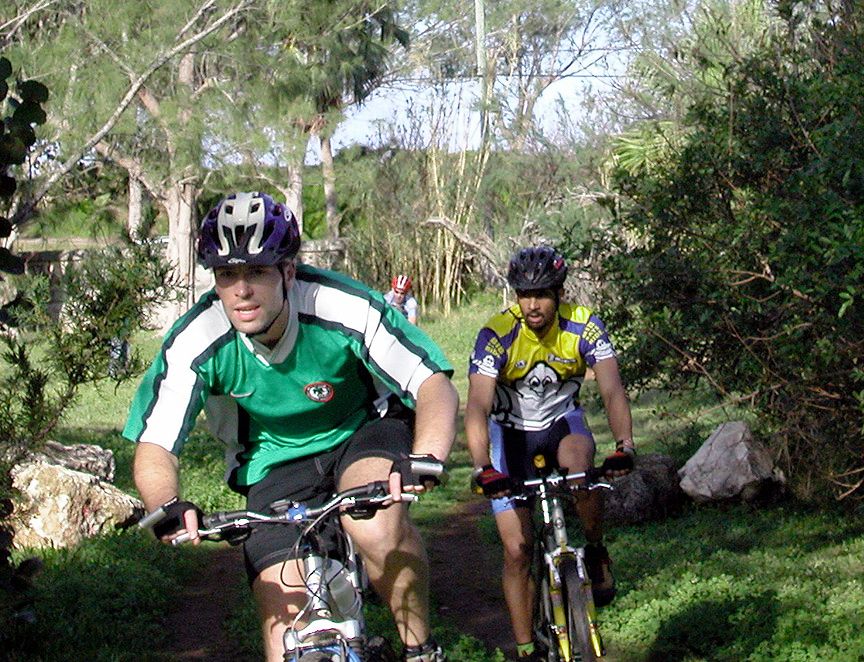
Bermuda gave me five years of hard work and a remarkable way of life. An archipelago of 181 islands, painted in many colours and edged with pink sand and aqua blue bays. But as memorable as the setting was, the professional lesson ran deeper. That experience showed me what becomes possible when people work from one coordinated truth, and it planted the seed that has shaped everything I have built since.
Vancouver: The Hidden Gap Widens
In 2006, an opportunity brought me to Vancouver, British Columbia, where I spent the next decade working as a Building Information Management (BIM) coordinator and implementation lead on complex mixed-use towers, care homes, and residential projects. Vancouver, framed by mountains and ocean, is a remarkable place to live, and it was there, on my 40th birthday, that I was awarded Canadian Citizenship, an honour I remain deeply proud of.
I moved from CAD to BIM early, and quickly recognised its potential. For the first time, the 3D modelling environment made it possible to virtually construct and coordinate design within a single source of truth. But the industry was still shaped by drafting and CAD-based management structures. Like CAD before it, BIM demanded a rethink of process, yet that shift only happened in isolated pockets. Mentorship had already weakened through the CAD transition, while BIM required even deeper technical understanding to deliver a model that could truly be built. Meanwhile, digital production made copying information effortless, and duplication became normal. What looked efficient on the surface often carried a hidden cost of confusion.
A quiet divide began to widen. Many leaders were guiding projects from hard-won experience rooted in two-dimensional production, while those with the deepest BIM knowledge were often positioned mainly as production support. They could see the gaps but rarely had the authority to shape the work early enough to matter. Pre-project planning mattered more than ever, yet projects were still being pushed to start faster. Information on existing conditions arrived late, assumptions took hold before coordination had a chance to lead, and models were used to represent the work, but not always to govern it.
They could see the gaps but rarely had the authority to shape the work early enough to matter.
The Cayman Islands: The Lightbulb Moment
I met my wife in Vancouver, and together we relocated to the Cayman Islands in 2016. There, I joined an owner-contractor firm with its own internal design department and helped build the BIM/VDC team from the ground up. The systems we developed were tested across a range of projects, including a residential tower, a hotel, a school, a supermarket, and an office tower.
The systems proved themselves through design and construction, but it was clear that strong technical systems alone were not enough. Established hierarchies, competing priorities, and resistance to change made it difficult for transparent truth-led decisions to take hold. Even with the right tools, the right people, and the right intent, the wider conditions around the work often limited how far the system could truly carry the project.
That was the lightbulb moment. The problem was never tools or talent, it was the absence of a simple, shared system to lock clarity, accountability, and transparency into a project from the outset, and the deeper resistance to putting such a system in place.
Powell River: Building What Comes Next
Leaving the Cayman Islands, my wife and I knew we were heading back to British Columbia, but not to the city. While still in Cayman, one place kept drawing our attention: Powell River on the Sunshine Coast.
We knew nothing about it, but the more we looked, the more it drew us in. Here, the outdoors is not somewhere you go. It begins as soon as you step out your door. Within 300 yards, I am in my favourite place: the forest. Around us lies a playground of logging roads, 32 lakes, and the freedom to explore them in our off-road vehicle. We camp in it too, tucked safely away from bears and cougars. Being so close to nature provides us with the kind of life we want beyond work, and that balance matters.
Powell River became the place where V&RB truly began to take shape. I kept studying the industry, paying close attention to where firms and projects start to falter, what those failures cost, and what kind of system might guide delivery with greater clarity from the outset. In May 2025, I officially incorporated Vellum & Razor Blades. Since then, the Razor Method and its core principles have continued to evolve, and I have felt increasingly certain that the work is moving in the right direction.
AI is moving faster than any shift I have seen before. For the third time in my career, this industry is being asked if it is willing to rethink the way it works. The difference now is that AI will not thrive inside ineffective systems, it will expose them. Firms that act with courage and clarity now, even if the step feels uncomfortable, will have the chance to challenge competitors many times their size by delivering better work, in less time, with far greater consistency and accuracy. This feels like one of those rare moments when the cost of standing still may be greater than the risk of moving forward.
Why Vellum & Razor Blades Exists
Over three decades, the same pattern kept surfacing across firms, countries, and waves of technological change. Projects begin with urgency before the delivery promise is defined. Ownership remains unclear. Coordination fragments and good people are left carrying the strain of holding reactive work together inside systems that were never designed to support them. That pattern matters even more now, because AI will not repair weak foundations. It will reveal them.
That pattern matters even more now, because AI will not repair weak foundations. It will reveal them.
V&RB exists to give teams a clearer, more accountable way to start and coordinate projects. The Razor Method offers AECO firms and project teams a practical framework for beginning with a clear delivery promise, defined responsibilities, and a single coordinated workflow.
Its five principles are captured in SHARP: Start With Clarity. Hone The Checks. Assign Real Owners. Run One Workflow. Prime The System.
SHARP is supported by OPS - Operationally Primed for Success, it helps create the conditions for stronger collaboration, better alignment, and more confident delivery.
This is not about adding more documents or chasing better software. It is about how projects begin, how ownership is understood, and whether coordination is guided by clarity or left to drift into confusion.
My mission is to make delivery predictable and coordination confident, so design intent survives construction pressure and reputation stays intact.
Predictable Delivery. Confident Coordination.
If this resonates, I would be delighted to have you subscribe and follow along. If your team is feeling delivery pressure and you want to explore where greater clarity might help, you are welcome to book a clarity call.