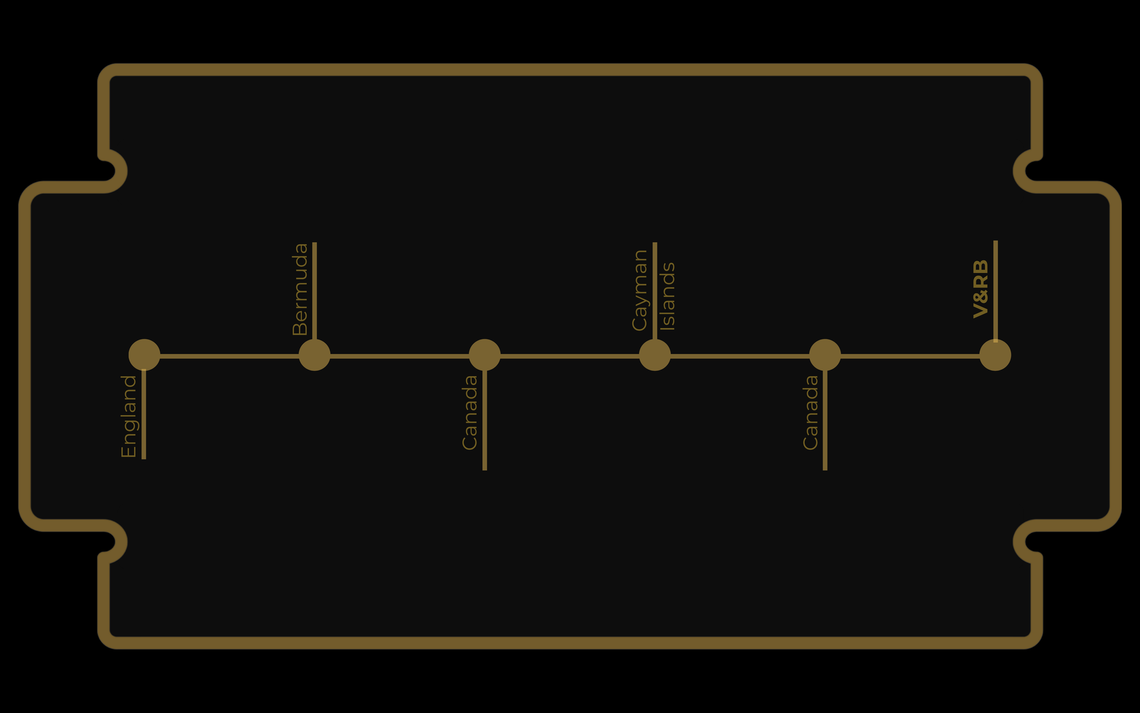
Architecture, Engineering, Construction and Operations (AECO). The industry that plans, builds, and manages buildings and infrastructure.
A project delivery method for AECO firms and project teams.
Most projects begin in a rush, causing lack of clarity which creates problems that compound through design, construction, and even into the asset’s operational life. When the who, what, when, where, why, and how are not clearly defined in a project’s earliest steps, waste enters the process through redesign, rework, and avoidable confusion.
I’ve spent three decades inside AECO project delivery, and I’ve watched the same patterns repeat again and again. They push delivery into a reactive mode, where teams are left scrambling from one urgent demand to the next instead of working with clarity, rhythm, and control.
"They push delivery into a reactive mode, where teams are left scrambling from one urgent demand to the next instead of working with clarity, rhythm, and control."
What’s needed is a cohesive system that respects the needs of every person, connects them intuitively to the right data at the right time, and keeps the broader project picture clearly in view.
That's what the Razor Method was built to deliver.
The Core Idea: People, Workflow, Tools
Tools come and go. The way teams structure information, make decisions, and communicate is what endures, and it determines whether delivery moves with flow or fractures under pressure.
Every firm I’ve worked with deployed the right tools, and most had standards written down somewhere. What they lacked was a method that could carry those standards through real deadline pressure and make them truthful when it mattered.
"What they lacked was a method that could carry those standards through real deadline pressure and make them truthful when it mattered."
The Razor Method puts people first, connecting them to the tools they need through clear workflows and enabling them to operate as a unified team. It’s not about adopting another platform. It’s about defining an intelligent network of tools and processes where people can do their best work.
Two Layers, One Method
Through my years of experience, the same gaps kept showing up in two places. Firms had no repeatable system feeding their projects, and projects had no structured methodology guiding delivery from start to finish. The Razor Method was built to close both.
It operates on two complementary layers. Both are essential, and each strengthens the other.
Razor OPS (Operationally Primed for Success) builds the machine. It is the firm-level system of people, policies, intelligence, workflow, and tools that support every project. The operating system that ensures delivery does not start from scratch each time. It’s built once, then applied across every job where SHARP will run.
Razor SHARP runs the job. Five principles that prepare each project for success and track its health from start to finish. It’s the discipline that turns a good operating system into a predictable project outcome.
OPS builds the machine. SHARP runs the job.
One without the other leaves a gap. A firm with strong operations but no project-level discipline still gets hurt on individual jobs. A team running SHARP principles on a project with no operational backbone is fighting upstream every day.
For firms where the operational backbone is already mature, SHARP can be applied immediately at the project level. OPS remains the deeper system that strengthens consistency and scalability over time, but SHARP does not need to wait for perfection before it begins delivering value.
OPS: The Machine
Every project your firm delivers should be supported by a system designed before the project begins. That system is OPS.
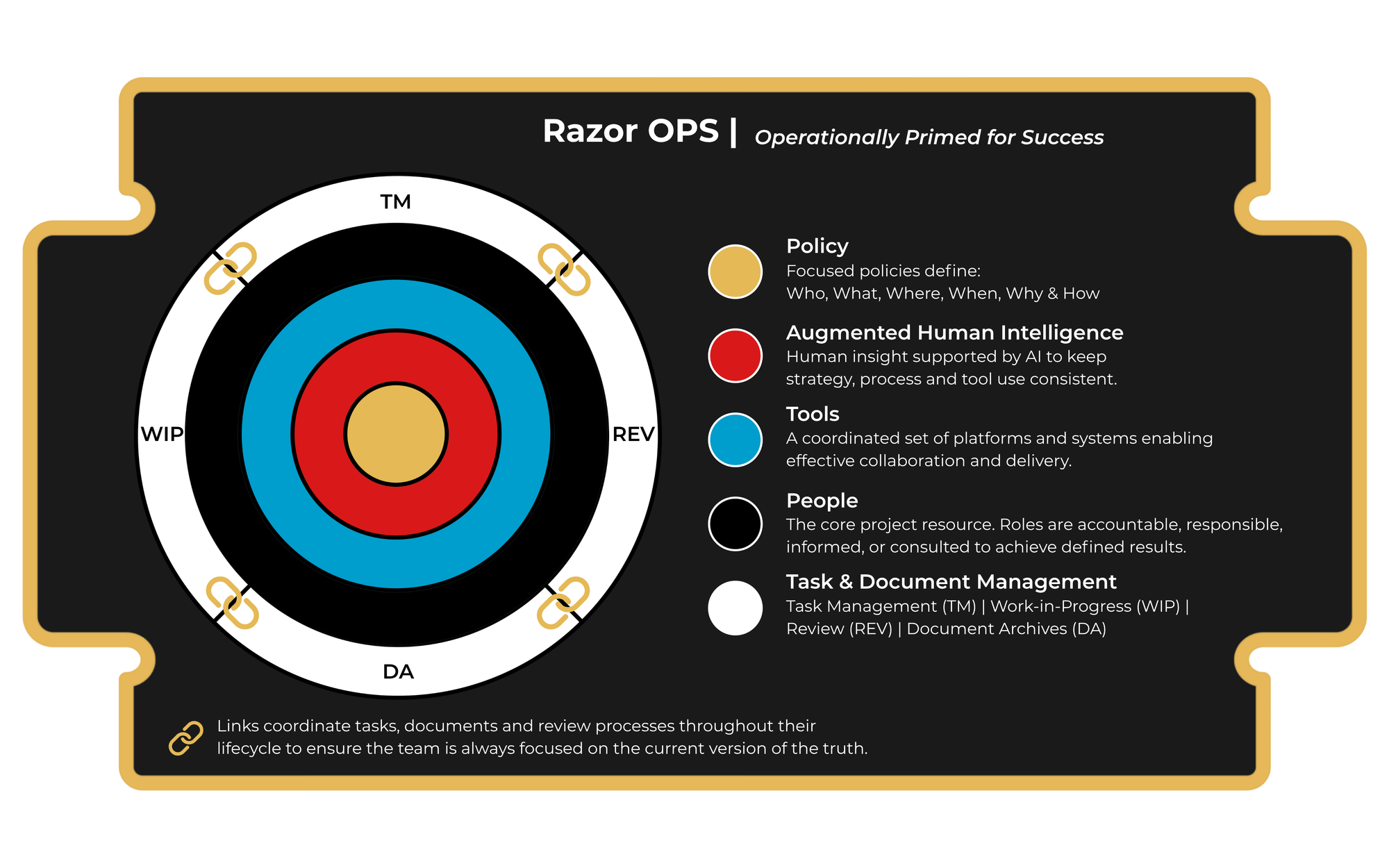
It’s structured as a set of interconnected layers, each reinforcing the others:
Policy — Precise, well-structured definitions of the who, what, where, when, why, and how for each major task and deliverable. It provides consistent guidance across the entire project lifecycle.
Augmented Human Intelligence — Keeps human judgment at the centre while AI strengthens decision-making, surfaces risk, and helps strategy remain clear and consistent.
Tools — Form a coordinated ecosystem, where the Common Data Environment, QA/QC platforms, task management, and communication channels are deliberately selected and aligned to policy-defined processes.
People — People are the most vital resource. Clear policies define who is accountable, responsible, informed, or consulted for each outcome. That clarity removes ambiguity around decision-making and ownership.
Task and Document Management — Brings live work-in-progress, formal review, and official publishing into one structured flow. It governs the full lifecycle of documentation so the project team always knows what is current, what is under review, and what is complete.
These layers are not linear. They are systemic, with each part reinforcing the whole. That is what makes delivery repeatable across projects, rather than dependent on isolated success.
SHARP: The Project Method
The SHARP principles are designed to close the five gaps where projects most often begin to break, before pressure has the chance to expose them.
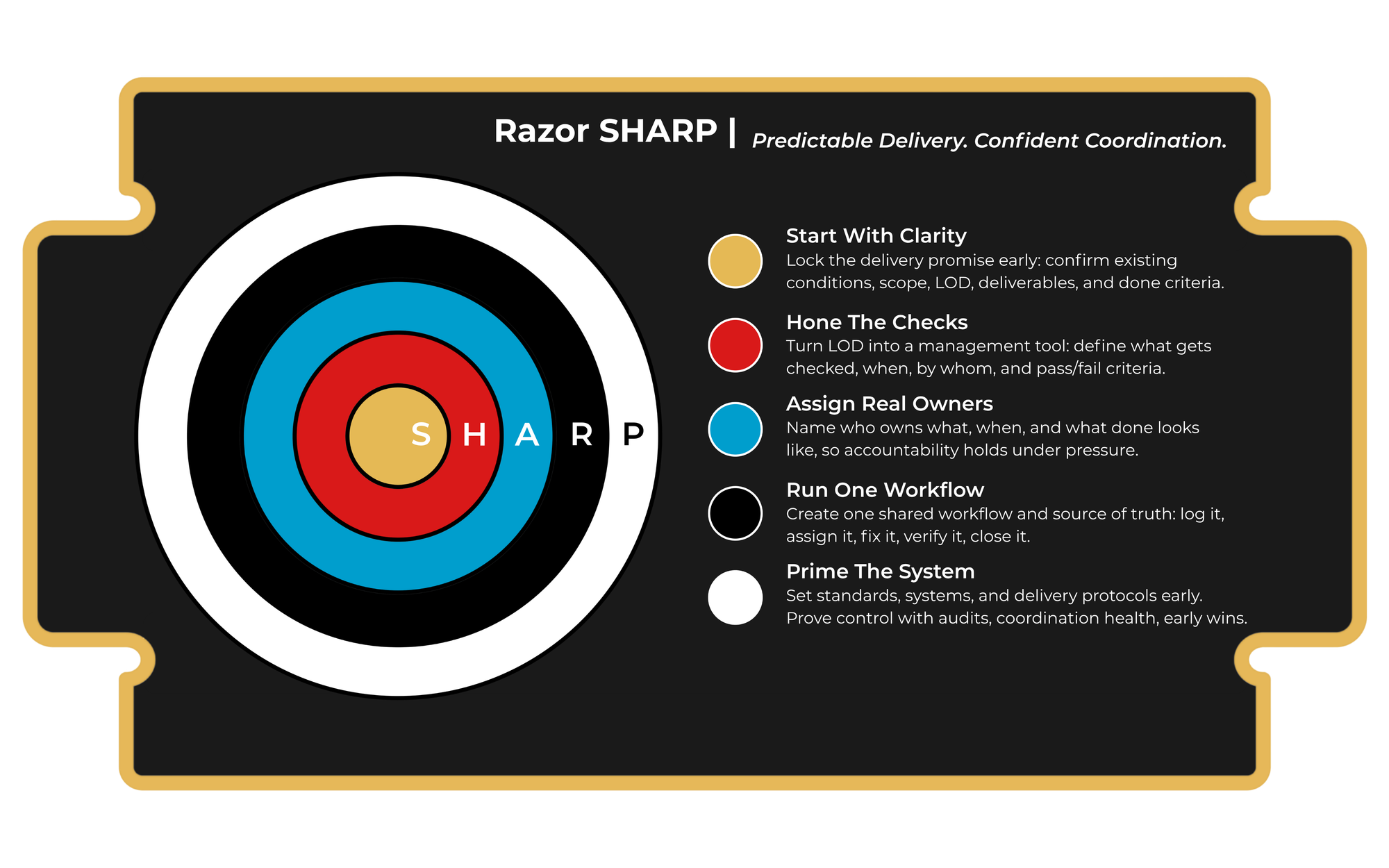
S — Start With Clarity: Lock the delivery promise on day one. Confirm existing conditions, scope, LOD, deliverables, and what done means. When everyone is working toward the same target, false starts are reduced, energy is better directed, and fee is protected from quiet, avoidable loss.
H — Hone The Checks: Turn coordination into a real plan, not a calendar invite. Define what gets checked, when, by whom, and against what standard. This allows issues to surface early, while there is still time to respond with control.
A — Assign Real Owners: Assign owners for what is needed, when, and clearly define what ‘done’ looks like at every stage. When ownership is explicit, accountability holds under pressure. When left assumed, standards begin to slip the moment conditions tighten.
R — Run One Workflow: Create one shared workflow and one source of truth for effective issue resolution. Capture it, assign it, resolve it, verify it, and close it. No duplicate issue logs. No scattered markups across email, chat, and private spreadsheets. Just one current record of what is open, what is resolved, and what the team can rely on.
P — Prime The System: Set standards, systems, and digital delivery protocols early. Run audits and coordination health checks before deadline pressure tests the work. The aim is to build a system that is genuinely in control before it is challenged, not one that scrambles to appear so at the last moment. Control is earned through preparation, not hoped for under pressure.
"Control is earned through preparation, not hoped for under pressure."
These principles are drawn directly from the recurring points where I have watched projects begin to fracture, across multiple firms, dozens of projects, and three decades of delivery.
Where It Actually Hurts
The industry data confirms what practitioners have felt for years: much of the rework burden traces back to poor information, weak coordination, and miscommunication. These are not inevitable problems. They are often the result of gaps that could have been addressed much earlier through clearer planning, stronger alignment, and better front-end decision-making. Meanwhile, construction productivity has remained stubbornly flat for decades while many other major industries have continued to advance.
But the numbers tell only half the story.
The real cost is personal. It is the stress your team carries when they are constantly on the back foot, firefighting daily and rarely feeling in control. It is the coordination meeting where the misalignment runs deeper than expected, the redesign will take weeks, and every discipline is affected. It is the principal walking into a client conversation hoping the delivery story still holds together. It is the margin leaking quietly and constantly, like a window that was never properly sealed. You may not notice the draft unless you are standing right beside it, but the heat is escaping all the time.
The deeper fear beneath all of it is simple: teams are being asked to deliver what has never been clearly defined. When that gap reveals itself downstream, it rarely feels like a process failure. It feels like leadership lacked control at the moment it mattered most.
"The deeper fear beneath all of it is simple: teams are being asked to deliver what has never been clearly defined."
The Razor Method exists to close that gap. OPS provides the machine. SHARP provides the discipline. Together, they turn delivery from something teams simply endure into something they can lead with confidence and stand behind.
Where to Start
If your next project cannot afford to begin the way the last one did, that is a conversation worth having before the cycle starts again.
The Clarity Call maps your current delivery setup against the five SHARP principles and reveals where the real gaps are. No pitch. No generic recommendations. Just a clear view of where you stand, where pressure is entering the system, and what it may be costing you.